
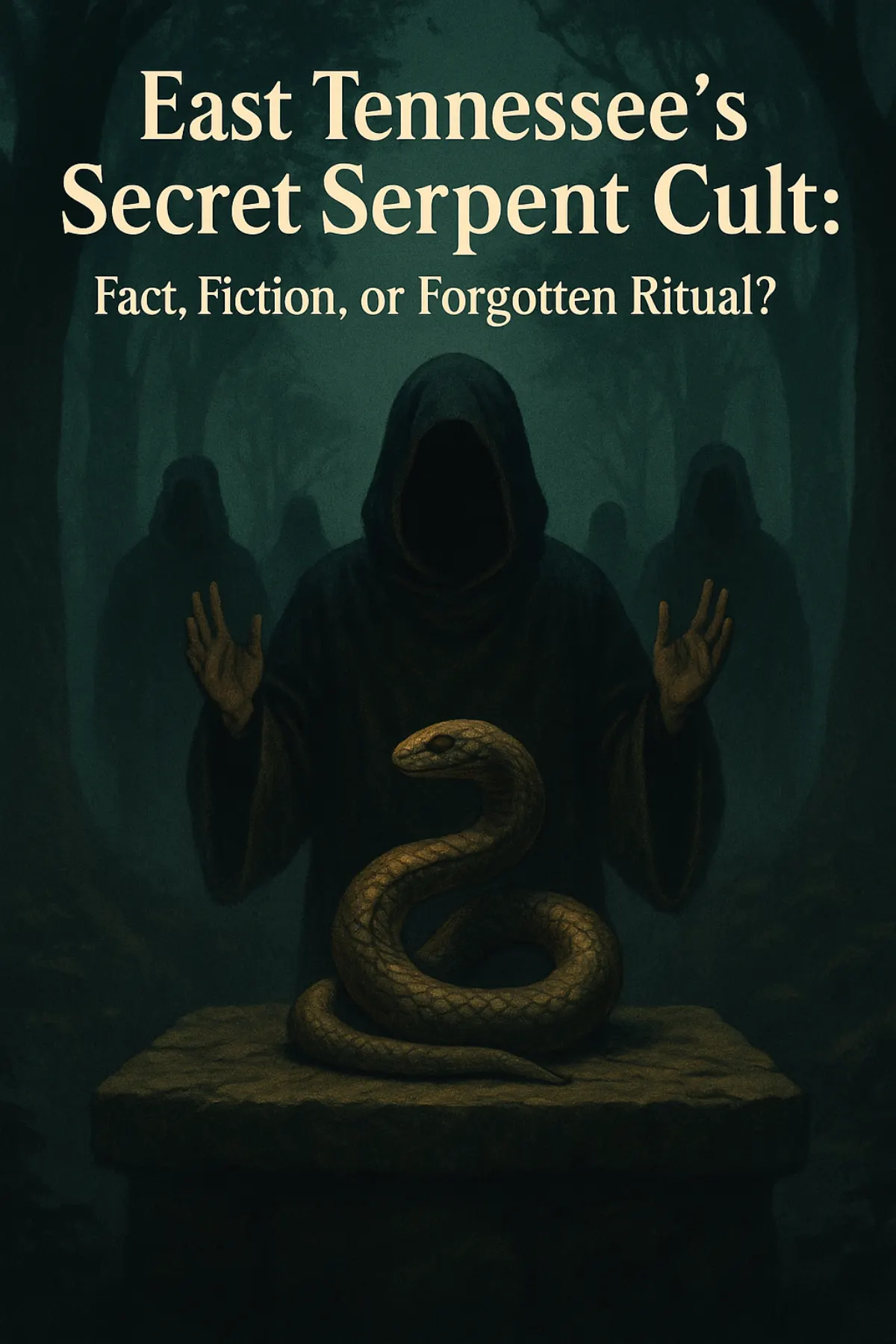
East Tennessee’s Secret Serpent Cult: Fact, Fiction, or Forgotten Ritual?
Introduction: Whispers from the Hollows
Deep in the Appalachian hollows of East Tennessee, where the mist clings to the ridges and the river bends hide shadows that seem almost sentient, whispers speak of a society most never hear of: a secret cult devoted to serpents. Some call it legend. Others call it a dark fragment of forgotten history. And a few—those who claim to have witnessed its rituals—swear it is terrifyingly real.
Chattanooga Valley and the surrounding Tennessee highlands are riddled with strange histories. From unexplained lights over Signal Mountain to spectral choirs floating along Moccasin Bend, the region has a long tradition of blending folklore with the unexplained. But the story of the Serpent Cult strikes a different note—it is secretive, sinister, and slithers in the cracks of East Tennessee’s collective memory.
Origins of the Cult: Myth or Reality?
The roots of the serpent cult are murky, tangled in Native American lore, early settler tales, and whispers of clandestine Appalachian societies. Legends suggest the cult may trace back to Cherokee mythology, where snakes symbolized wisdom, healing, and spiritual guardianship. Certain serpentine deities were believed to command respect—and perhaps fear.
By the late 1800s, rumors began to circulate among East Tennessee mountain communities: small, secret gatherings at night, strange chants in the hollows, and symbols carved into trees and rocks that resembled coiled serpents. Locals spoke in hushed tones of hooded figures, serpentine talismans, and rituals that seemed to promise power—but at what cost?
Eyewitness Accounts: The Slithering Shadows
Though largely undocumented, several accounts have surfaced over the years:
The Hunter’s Tale (1932): A game hunter recalled seeing hooded figures surrounding a stone circle deep in the woods, moving in synchronized, serpent-like motions. The witness fled when one figure lifted a coiled object—possibly a real snake—toward the moon.
The Miner’s Confession: A retired coal miner from the Cumberland Plateau claimed his father was initiated into the cult in his youth. He described chanting, offerings, and the presence of snakes, but insisted it was more than superstition—it was religion, raw and secret.
Modern Paranormal Observers: In recent decades, ghost hunters and urban explorers report strange hiss-like sounds, sudden drops in temperature, and odd symbols etched into boulders in the backcountry. While some chalk it up to wildlife or wind, the patterns are too deliberate to be random.
Rituals and Beliefs: A Glimpse into the Shadows
According to fragmented accounts, the cult’s practices were tied to cycles of the moon and seasonal changes:
Snake Veneration: Snakes were considered messengers between the spiritual and mortal worlds. Members allegedly performed dances mimicking the serpent’s movements to invite wisdom or protection.
Offerings and Symbols: Food, small trinkets, and occasionally crafted serpent figurines were left at ritual sites. Mysterious symbols resembling coiled snakes or spirals have been found etched into the rocks of East Tennessee’s remote ridges.
Initiation Rites: Legend claims initiates would face their fear of snakes literally, often handling non-venomous serpents to prove courage and allegiance.
Whether these rituals were benign expressions of spirituality or something darker remains open to debate.
Theories Behind the Cult
1. Native American Roots
Some scholars suggest that the so-called cult may simply be a distortion of Cherokee ceremonial practices. Snakes were sacred in certain tribes, representing healing, rebirth, and spiritual guidance. Over time, European settlers may have misinterpreted these rituals, adding an aura of fear and secrecy.
2. Appalachian Folklore and Fear
The Appalachian Mountains are fertile ground for folklore. Stories of secret societies, witches, and cults thrive in isolated communities. The Serpent Cult may be an amalgamation of myth, exaggeration, and cautionary tales told to keep children—or outsiders—away from dangerous wilderness areas.
3. Real Occult Societies
There are theories that small, clandestine groups may have indeed existed, practicing esoteric rituals inspired by global occult traditions, snake symbolism, or secret knowledge. However, no concrete evidence has ever been found, and much remains anecdotal.
Chilling Facts You Didn’t Know
The “Hissing Hill” Phenomenon: Certain East Tennessee hills are known for wind patterns that create a faint hissing sound. Locals claim this is the cult’s call to members—a natural phenomenon turned legend.
Symbols in Unexpected Places: Stones near Chattanooga Valley and the Cumberland Plateau sometimes bear carvings resembling coiled serpents, some dating back over a century.
Disappearing Members: Rumors persist that several individuals involved in the cult “vanished” under mysterious circumstances, feeding the tales of dark consequences for those who fail initiation.
Top 5 Creepiest East Tennessee Folklore Sites
Moccasin Bend Phantom Choir – Ghostly voices echoing over the river.
Raccoon Mountain’s Devil Chair – Sit if you dare, but don’t expect to leave unchanged.
Signal Mountain Eternal Light – UFO or warning from beyond?
The Lost Cherokee Relic Site – Allegedly cursed artifacts that brought misfortune.
Appalachian Serpent Sites – Remote hollows where snake symbolism dominates the legends.
Visiting East Tennessee: In Search of the Unknown
For those brave enough to explore, the mountains of East Tennessee offer:
Remote hikes with rich, dense forest cover
Sites with historical artifacts and mysterious carvings
Nighttime explorations, though locals caution about trespassing and natural dangers
Whether the Serpent Cult ever truly existed, or is simply a manifestation of Appalachian mythology, the area is steeped in mystery and continues to inspire curiosity—and fear.
Conclusion: Fact, Fiction, or Folklore?
The Secret Serpent Cult of East Tennessee remains one of the region’s most enigmatic legends. Between Native American history, European settler myth-making, and the power of Appalachian storytelling, the truth may be forever obscured by time—and perhaps by the serpents themselves.
If you ever wander the remote hollows near Chattanooga Valley and hear a hiss in the night or glimpse a coiled figure among the trees, ask yourself: is it fear, folklore, or a whisper from a forgotten cult? Share your experiences in the comments, explore more regional legends, and stay tuned for more chilling stories from the heart of Tennessee.